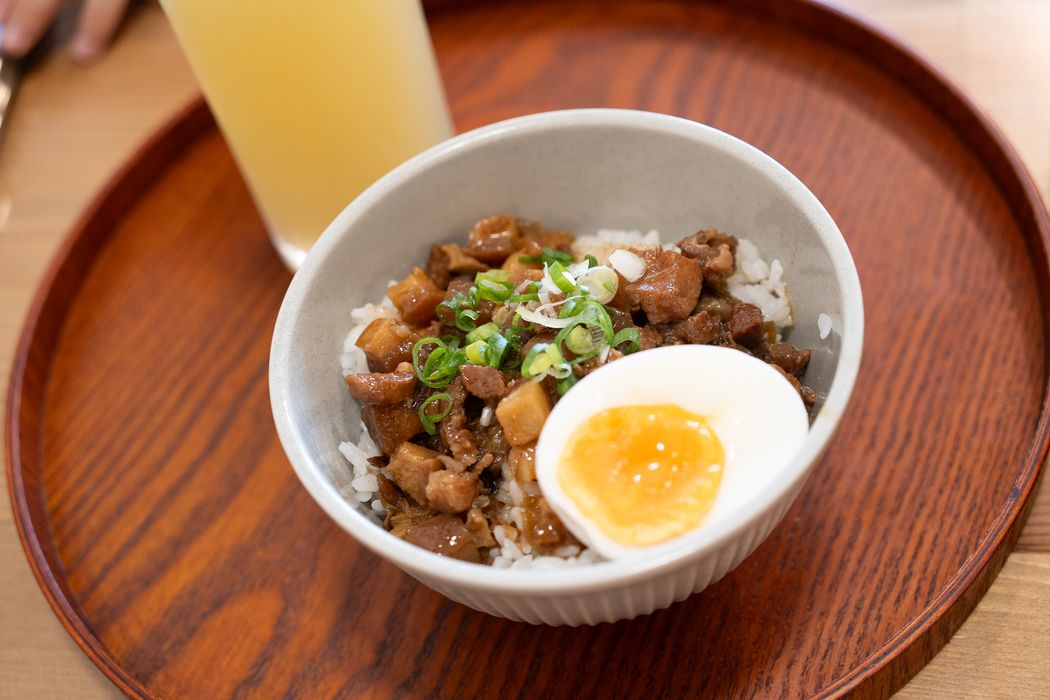
How Many Calories Are in 滷肉飯 (Lu Rou Fan)?
滷肉飯 (lǔ ròu fàn), or braised pork rice, is arguably Taiwan's national dish. You'll find it at night markets, bento shops, and home kitchens across the island. But if you've ever tried to log it in a calorie tracker, you know the frustration — most apps either don't recognize it, or give wildly inaccurate numbers.
Here's the real breakdown.
Standard serving (one bowl, ~350g)
| Nutrient | Amount | % Daily Value |
|---|---|---|
| Calories | 500–580 kcal | 25–29% |
| Protein | 18–22g | 36–44% |
| Carbohydrates | 55–65g | 20–24% |
| Fat | 22–28g | 28–36% |
| Sodium | 650–900mg | 28–39% |
The calorie count depends heavily on three things: the ratio of fatty to lean pork, the amount of rice, and whether the shop is generous with the braising sauce.
How toppings change the numbers
Lu rou fan rarely comes alone. Here's how common additions affect your total:
| Topping | Extra Calories | Protein Boost |
|---|---|---|
| 滷蛋 Braised egg | +78 kcal | +6g |
| 筍絲 Bamboo shoots | +25 kcal | +2g |
| 滷豆腐 Braised tofu | +90 kcal | +8g |
| 酸菜 Pickled mustard greens | +15 kcal | +1g |
| 油豆腐 Fried tofu | +130 kcal | +9g |
Pro tip: Adding a braised egg (+6g protein for only 78 calories) is one of the best protein-to-calorie trades you can make at a Taiwanese bento shop.
Small vs. large bowl
Most shops offer 小碗 (small) and 大碗 (large). The difference is significant:
- Small bowl (~250g): 350–400 kcal
- Large bowl (~400g): 580–680 kcal
The large bowl typically has 50% more rice and a more generous pour of braising sauce, which is where most of the extra fat calories come from.
Compared to other Taiwanese staples
| Dish | Calories | Protein |
|---|---|---|
| 滷肉飯 Lu rou fan | 500–580 | 18–22g |
| 雞腿飯 Chicken leg bento | 650–800 | 35–42g |
| 排骨飯 Pork chop bento | 700–850 | 30–38g |
| 牛肉麵 Beef noodle soup | 550–700 | 28–35g |
| 蛋餅 Egg pancake (dan bing) | 250–350 | 10–14g |
Why other apps get this wrong
We tested 滷肉飯 on three popular calorie trackers. Cal AI identified it as "rice with sauce" and estimated 280 calories — nearly half the actual amount. MyFitnessPal's database had user entries ranging from 200 to 900 calories with no way to know which was accurate. Lose It! couldn't identify it at all.
The problem isn't just food recognition — it's that these apps were never trained on Taiwanese cuisine. Their databases are built primarily from Western food data, and their AI models don't understand the nuances of braising sauces, rice portions, and regional variations.
How Bao handles it
Bao was built for exactly this. Snap a photo of your 滷肉飯 and Bao recognizes not just the dish, but estimates the portion size, identifies toppings, and gives you an accurate macro breakdown — in Traditional Chinese or English. It even suggests how to balance the rest of your day: "You're 15g short on protein — add a tea egg or a side of edamame at dinner."
Stop guessing your macros
Bao gives you honest nutrition estimates for the food you actually eat.
Download on the App Store