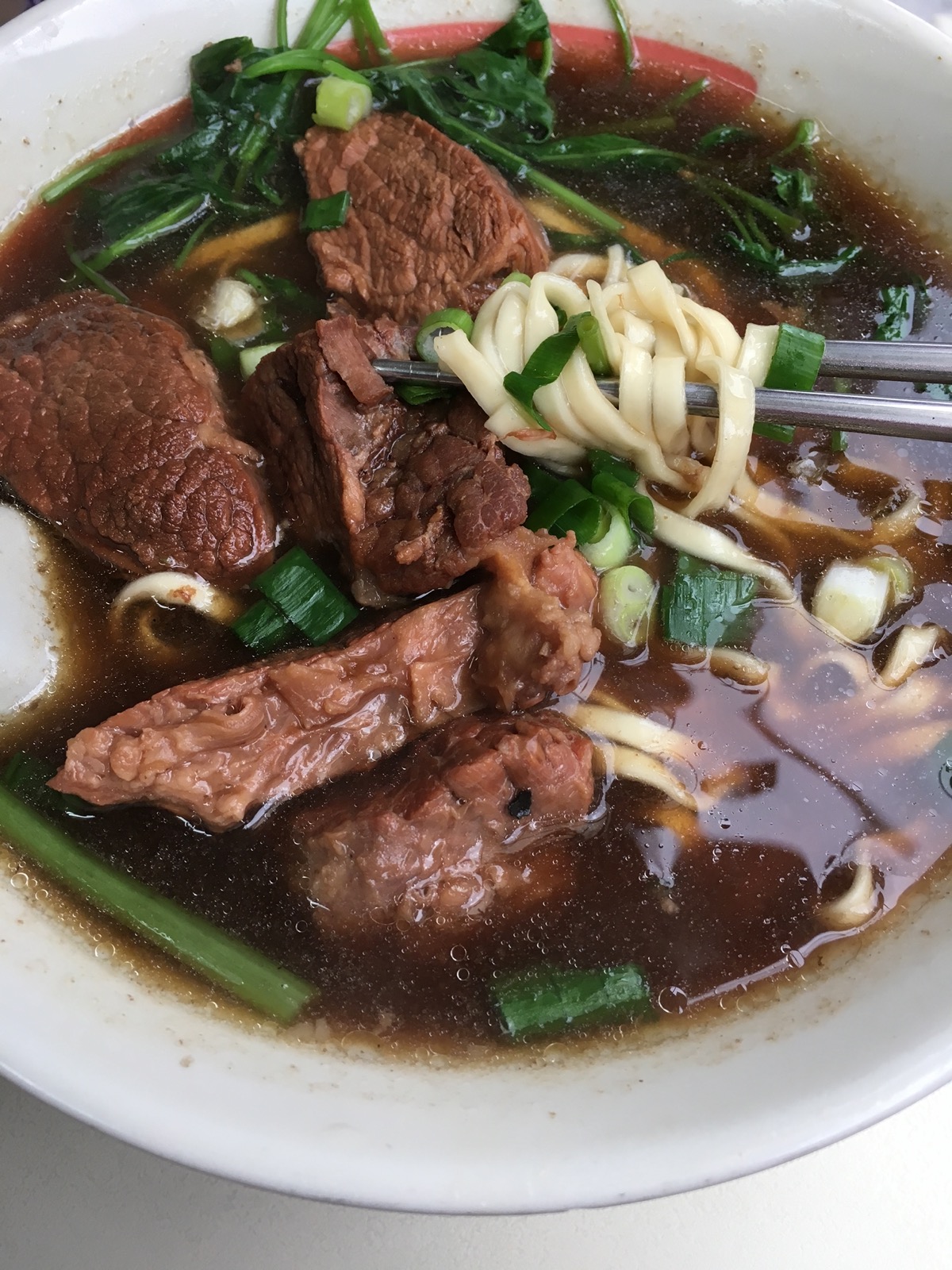
How Many Calories Are in 牛肉麵 (Taiwanese Beef Noodle Soup)?
牛肉麵 (niú ròu miàn) is close to Taiwan's unofficial national dish — Taipei has run an entire festival built around it. But "a bowl of beef noodle soup" covers a huge range of actual food: broth style, noodle portion, and how much beef (and which cut) all vary wildly from shop to shop. That range is most of the story for calories, more than the beef itself.
Standard serving (one bowl, noodles + broth + beef + greens, ~600g)
| Nutrient | Amount | % Daily Value |
|---|---|---|
| Calories | 650–820 kcal | 33–41% |
| Protein | 34–42g | 68–84% |
| Carbohydrates | 70–88g | 25–32% |
| Fat | 20–30g | 26–38% |
| Sodium | 1500–1900mg | 65–83% |
This is a genuinely high-sodium bowl by design — the broth is meant to be sipped, not just a noodle-cooking liquid, and both major styles below lean on soy sauce or salt to get there.
紅燒 (soy-braised) vs. 清燉 (clear broth) — the split that actually matters
紅燒 broth is built on soy sauce, doubanjiang (spicy fermented bean paste), and rock sugar, simmered for hours with the beef — it's darker, richer, and usually has a visible layer of oil on top. 清燉 broth is closer to a clear, lightly salted beef stock, without the paste or the long oil-rendering braise. A well-made 清燉 bowl can run 100–150 kcal lower than a fully loaded 紅燒 bowl, mostly from that oil layer and the sugar in the marinade — not from the beef, which is roughly the same either way.
The noodle portion is usually the bigger lever, not the beef. Restaurant bowls range from a light ~150g serving to a doubled "noodle refill" (加麵) near 400g — that swing alone can add 200+ kcal before the beef is even part of the conversation.
Why other apps get this wrong
Generic calorie trackers built on Western food databases often log this as a "beef stew" or generic "beef soup," which misses the wheat noodles entirely — the single largest carbohydrate source in the bowl. Others apply a lighter clear-broth reference (closer to a Vietnamese pho) across the board, which meaningfully undercounts a richer 紅燒-style bowl.
How Bao handles it
Bao reads the broth color and the oil sheen on the surface to tell 紅燒 and 清燉 apart, then estimates noodle volume and beef density from the photo — instead of applying one fixed "noodle soup" number to every bowl.
Common questions
How many calories are in Taiwanese beef noodle soup (牛肉麵)? One standard bowl (about 600 g with noodles, broth, beef and greens) is roughly 650–820 kcal. That is a typical-range estimate, not an exact count. The page says broth style, noodle portion, and how much beef a shop gives, and which cut, vary a lot, and that range is most of the story, more than the beef itself.
Is beef noodle soup high in sodium? Yes, by design. A standard bowl lists 1500–1900 mg of sodium, which is 65–83% of the daily value. The page says the broth is meant to be sipped, not just a noodle-cooking liquid, and both major styles lean on soy sauce or salt to get there. These are typical ranges, not a measured bowl.
What changes the calories in beef noodle soup the most? The noodle portion, per the page, which calls it usually the bigger lever, not the beef. Bowls range from a light ~150 g serving to a doubled "noodle refill" (加麵) near 400 g, and that swing alone can add 200+ kcal. Broth style matters too: a clear 清燉 bowl can run 100–150 kcal lower than a fully loaded 紅燒 bowl. The beef gets the credit; the noodles did the work.
Are these beef noodle soup numbers exact? No. 650–820 kcal is a typical range for one bowl, and broth style, noodle amount and beef all shift it. Generic trackers often log this as "beef stew" and miss the wheat noodles entirely. Bao reads the broth color and oil sheen to tell 紅燒 and 清燉 apart, then estimates noodle volume and beef density from the photo.
Stop guessing your macros
Bao gives you honest nutrition estimates for the food you actually eat.
Download on the App Store