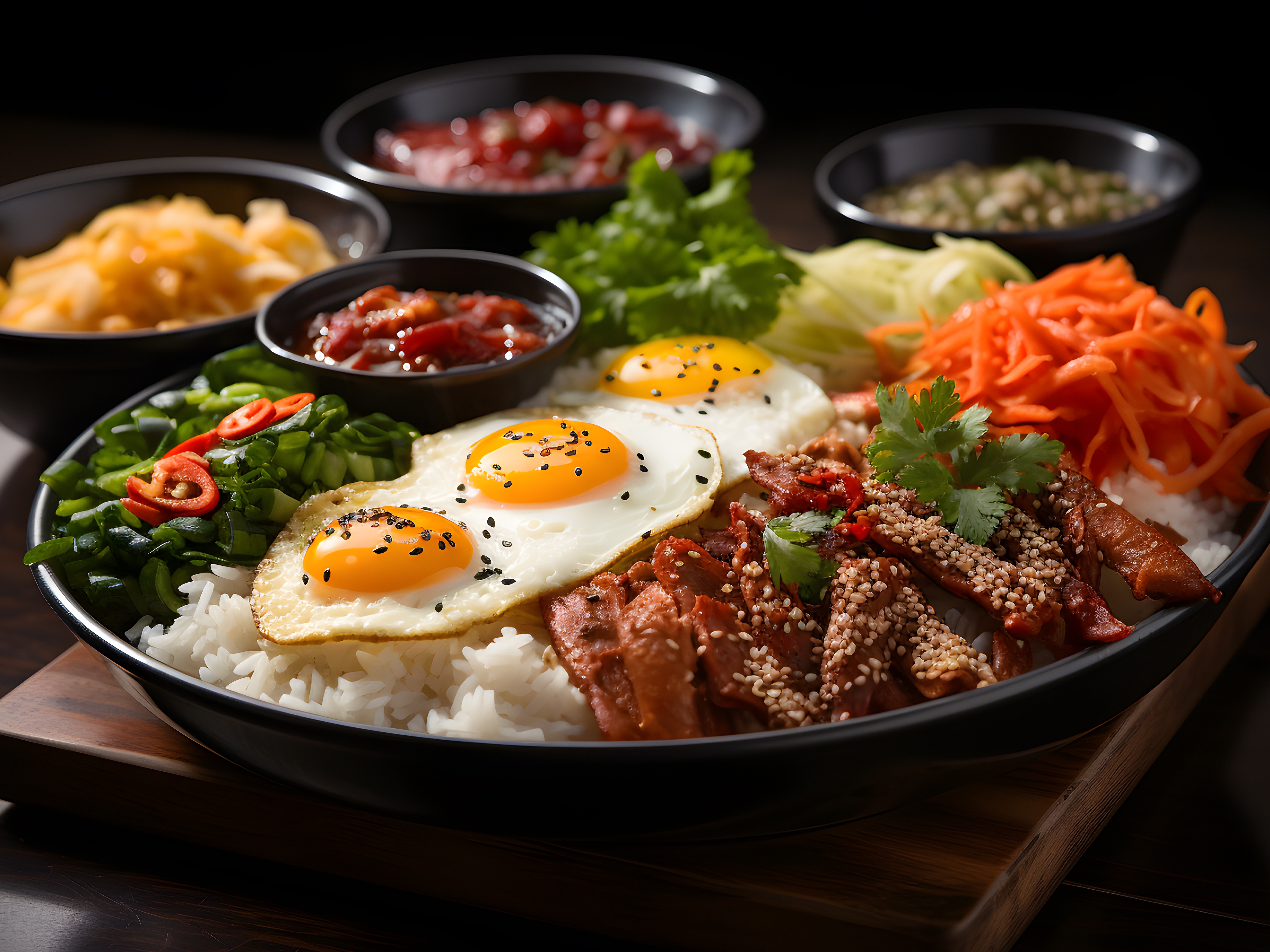
How Many Calories Are in Bibimbap?
Bibimbap looks like a health food — a bowl of rice topped with a spread of seasoned vegetables, a protein, and a fried egg. And the vegetables genuinely are light. The number that actually moves is the sauce, the rice, and whether it's served in a hot stone bowl.
Standard bowl (~450–550g)
| Nutrient | Amount | % Daily Value |
|---|---|---|
| Calories | 500–650 kcal | 25–33% |
| Protein | 20–28g | 40–56% |
| Carbohydrates | 65–80g | 24–29% |
| Fat | 15–22g | 19–28% |
| Sodium | 800–1,200mg | 35–52% |
Sodium is the number most people underestimate. Between the gochujang (Korean chili paste), soy-seasoned vegetables, and sesame oil, a full bowl of bibimbap can carry more sodium than a fast-food burger — before you even add extra sauce at the table.
Where the calories actually come from
| Component | Typical amount | Calories |
|---|---|---|
| White rice | 1.5 cups | ~340 kcal |
| Gochujang sauce | 2 tbsp | ~60 kcal |
| Sesame oil (drizzled) | 1 tbsp | ~120 kcal |
| Fried egg | 1 | ~90 kcal |
| Seasoned vegetables (namul) | ~1 cup mixed | ~70 kcal |
Notice the vegetables are almost a rounding error. The oil used to season them — and the sesame oil drizzled on top at the end — carries far more of the calorie load than the vegetables themselves.
Protein choice changes the total more than people expect
- Bulgogi beef (marinated, sweet soy): +180–220 kcal, +16g protein — the marinade sugar adds up alongside the protein
- Grilled tofu: +90–120 kcal, +10g protein — the lightest common option
- Ground beef (plain, seasoned): +150–180 kcal, +18g protein
- Egg only, no added meat: no extra beyond the fried egg already counted above
Dolsot (hot stone bowl) vs. regular bowl
Dolsot bibimbap is served in a heated stone bowl that crisps the bottom layer of rice into a crunchy crust (nurungji) as you eat. That crust is fried in the residual oil at the bottom of the bowl — it's genuinely tastier, but it typically adds 60–100 extra calories compared to a bibimbap served in a regular bowl.
Easy swap: Ask for the sauce on the side. Gochujang is where a large share of the sodium and sugar hides, and half the flavor still comes through with half the sauce.
How Bao handles it
Bao recognizes bibimbap from a photo and distinguishes the protein topping, whether it's served in a stone bowl, and estimates how much sauce was used — rather than logging every bibimbap as one fixed number regardless of what's actually in the bowl.
Stop guessing your macros
Bao gives you honest nutrition estimates for the food you actually eat.
Get early access