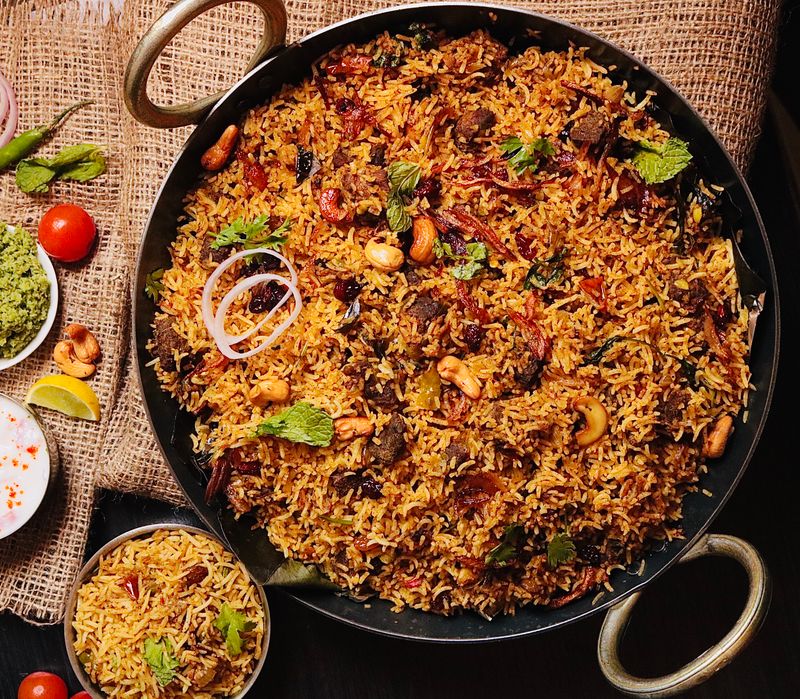
How Many Calories Are in Chicken Biryani?
Biryani is rice cooked with meat, whole spices, and usually a lot more oil or ghee than the ingredient list on any menu admits to. That makes it one of the harder dishes to estimate from a photo — not because the rice or the chicken are unusual, but because two bowls that look identical can carry very different amounts of fat depending entirely on who cooked them and how. Below is one real order, scanned twice, that shows exactly how much that difference is worth.
One real order, scanned
This is a single photo of a chicken biryani with a broccoli garnish, taken at an Indian restaurant and run through Bao's photo scan. Nothing below is a lab measurement — it's an AI estimate from one image, the same as every other figure on this page marked as a scan result.
| Item | Calories |
|---|---|
| Chicken Biryani | 338 kcal |
| Broccoli | 6 kcal |
| Cilantro garnish | 6 kcal |
| Total | 350 kcal |
The scan also returned 20g protein, 40g carbohydrate and 12g fat. Bao itemizes the plate down to the garnish — the cilantro on top of this bowl got its own line at 6 calories, the same as the broccoli.
One tap moves the number by 89
Bao's scan card carries a cooking-method chip — a way to tell it who actually made the food. Tap "Restaurant" on the exact same photo, with nothing else changed, and the card re-prices:
| Item | Calories |
|---|---|
| Chicken Biryani | 423 kcal |
| Broccoli | 8 kcal |
| Cilantro garnish | 8 kcal |
| Total | 439 kcal |
Protein and carbs stayed exactly where they were — 20g and 40g — but fat moved from 12g to 16g, and the total went up by 89 calories, without a single new ingredient added to the photo.
Why the number moves without the photo changing: a restaurant kitchen typically finishes biryani with ghee or oil for shine and flavor — sealed into the rice, not sitting on top where a camera can see it. A home cook making the same-looking dish usually uses less. Bao can't see the oil that's already absorbed into the rice any more than you can; telling it who cooked the meal is the only way to correct for it.
Biryani by type: a quick reference
The 350–439 range above is for one bowl of chicken biryani with a light garnish. Different styles of biryani start with very different amounts of meat, ghee and rice-to-protein ratio. These are typical single-serving reference estimates, not a real scan — use them as a baseline, not as the last word on any specific plate:
| Type | Calories | Protein | Carbs | Fat |
|---|---|---|---|---|
| Chicken Biryani | 550 kcal | 28g | 75g | 20g |
| Lamb Biryani | 550 kcal | 28g | 62g | 18g |
| Hyderabadi Biryani | 570 kcal | 30g | 64g | 19g |
| Vegetable Biryani | 450 kcal | 12g | 75g | 14g |
Common questions
Is vegetable biryani actually lower-calorie? Usually, yes, but not by as much as the missing meat would suggest — most of a biryani's calories are in the rice and the oil it's cooked in, and a vegetable version still has both.
Does "Dum" or "Kacchi" style change the calorie count? It can. Dum biryani is sealed and slow-cooked, which tends to use more ghee for the seal itself; a lighter home-style preparation with less oil will land under the ranges above, not over them.
How Bao handles it
Bao itemizes a biryani down to the garnish instead of returning one number for "rice dish," and the cooking-method chip lets you correct for the one thing a photo can never show: how much oil went in before the plate reached the table. Calorie figures on this page are ranges compiled from published nutrition data for the underlying dish; in-app figures are AI estimates from your own photo. Both are estimates, not lab measurements.
Stop guessing your macros
Bao gives you honest nutrition estimates for the food you actually eat.
Download on the App Store