How Many Calories Are in Hong Kong French Toast?
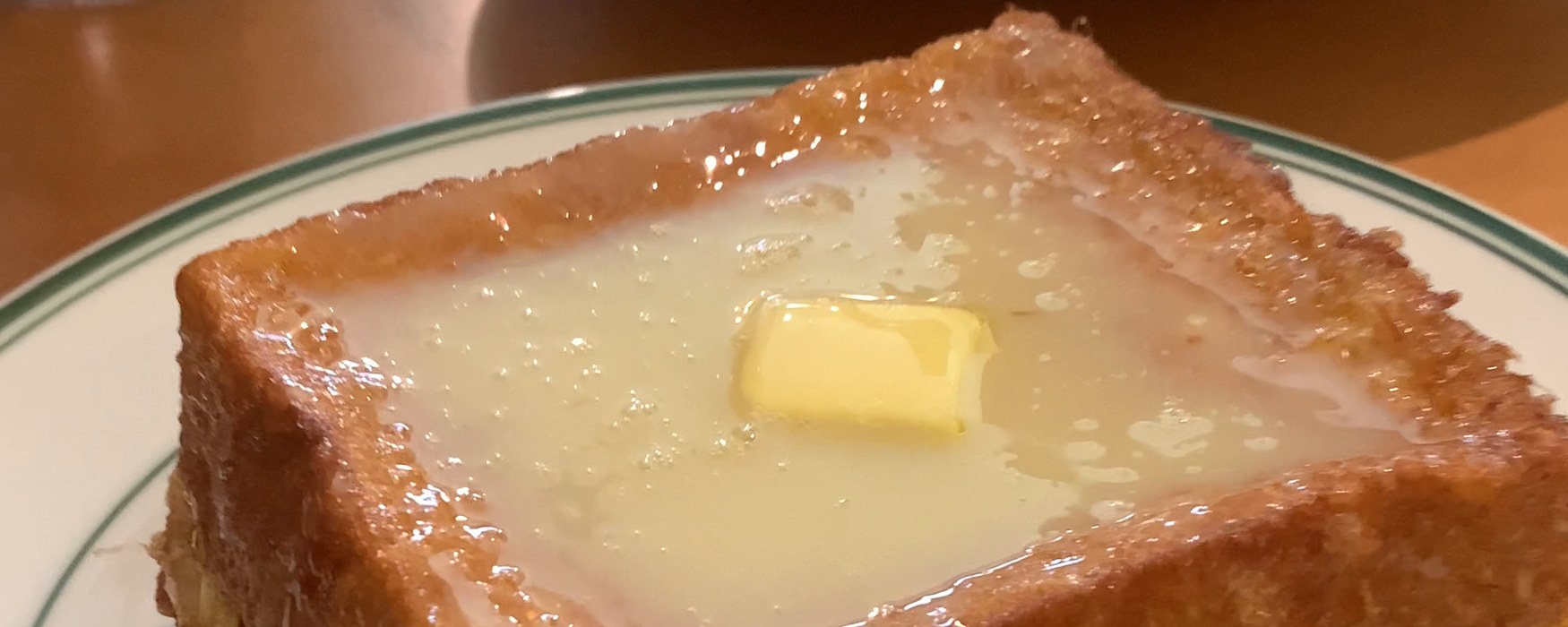
Hong Kong french toast — 西多士 — is not the brunch dish its English name suggests. Two thick slices of white bread go together, usually with peanut butter between them, get dipped in egg, and are then deep-fried rather than pan-fried. What arrives is a golden cube with a pat of butter melting on top and a pour of condensed milk or golden syrup over the whole thing.
That is four separate calorie sources on one plate, and only one of them is bread. It is also why the number people guess for it comes in low: they price a slice of toast, and what is actually in front of them is a fried sandwich finished like a dessert.
One real 西多士, scanned: 340 calories
This is one order, photographed once at a Hong Kong-style cafe and scanned into Bao — no menu math beforehand, no averaging against a generic database entry afterward.
| Item | Calories |
|---|---|
| Fried toast | 240 kcal |
| Condensed milk | 56 kcal |
| Butter | 44 kcal |
| Total | 340 kcal |
These are AI estimates from a single photo, not lab measurements. What matters is the shape of them rather than the last digit: 100 of those 340 calories never touched the bread. The butter and the condensed milk are 29% of the plate between them, and they are the two lines nobody writes down.
The takeaway: the topping is not a garnish on this dish. A pat of butter and a pour of condensed milk cost about as much as a slice of plain bread, and they arrive after the plate is already fried.
Why the range for 西多士 is so wide
Published figures for one order of cha chaan teng french toast run from roughly 300 to 680 calories. That spread is real rather than sloppy, and four things produce it.
| What moves it | Why |
|---|---|
| The filling | A plain version is two slices and nothing between them. The standard one has peanut butter; some shops use kaya. A heavy spread adds 90–190 kcal on its own. |
| How much oil the bread took | Deep-fried bread is a sponge. Oil temperature and time in the fryer move the answer more than the recipe does. |
| The topping | Condensed milk and golden syrup are not the same pour. A generous ladle runs well above the 56 kcal measured here. |
| Whether the butter is counted | A standard pat is 35–50 kcal. It is served in plain sight on top, and left out of nearly every estimate. |
The 340 above sits near the bottom of that band because it was one order with a modest pour, scanned exactly as it was served. A peanut-butter-filled version drowned in syrup is a different plate with the same name.
"French toast" and 西多士 are not the same food
This is the single biggest reason a lookup returns a number that feels wrong. Type "french toast" into most nutrition databases and you get the Western brunch dish: one or two slices soaked in egg and milk and pan-fried in a little butter, typically landing somewhere near 220–260 calories for a serving.
That is a genuinely different food from a deep-fried filled sandwich with a butter pat on top. The names collide; the cooking method does not. So if a tracker hands you something in the low 200s for a plate that looks like the photo at the top of this page, it has matched the wrong dish rather than mis-estimated the right one — and the fix is to check what it actually itemized, not to nudge the total.
What else is on a cha chaan teng table
| Item | Typical serving | Calories |
|---|---|---|
| Iced lemon tea (凍檸茶) | 1 glass | ~75–150 kcal |
| Egg tart (蛋撻) | 1 tart | ~180–230 kcal |
| Pineapple bun (菠蘿包) | 1 bun | ~230–420 kcal |
| French toast (西多士) | 1 order | ~300–680 kcal |
| Macaroni soup with ham and egg (餐蛋麵) | 1 bowl | ~700–750 kcal |
These are typical published ranges, not measurements of any one shop's kitchen. Cha chaan teng food is cooked by hand and by eye, so treat wide ranges as genuinely wide. The drinks side of that table is covered in detail on the iced lemon tea page — worth a look if you order one alongside, because a full-syrup large glass adds another 148 to the table on its own.
Common questions
Is 西多士 a breakfast or a dessert? The menu treats it as either. The numbers behave like dessert: it is fried bread with butter and sweetened condensed milk on it, and a plain one still costs more than an egg tart.
Can you order it lighter? Yes, and the two levers are the same ones that work on the drinks. Asking for the syrup or condensed milk on the side, and the butter on the side, leaves you the choice of how much of the 100 calories on top you actually want. Nothing about the fried bread changes.
Which costs more, a 西多士 or a 菠蘿油? They land in the same neighborhood, which surprises most people. A 菠蘿油 is a pineapple bun split with a cold slab of butter inside — same trick as this dish, different bread.
Does the peanut butter version cost much more? Enough to matter. A tablespoon and a half of peanut butter is roughly 140 calories, so a filled 西多士 can land closer to 480 than 340 without looking any different from the outside.
Is it shareable? It is cut into four in most shops, which is the honest answer to the whole page: split between two people the plate is around 170 each, and the arithmetic stops being the problem.
How Bao handles it
One photo returns the plate broken into its parts — the bread, the topping, the butter — rather than a single number filed under "french toast." That itemization is the difference between knowing the plate cost 340 and knowing that 100 of it was sitting on top in plain sight. It is also what makes the number checkable: if the butter row is missing, you can see it is missing.
Stop guessing your macros
Bao gives you honest nutrition estimates for the food you're actually eating.
Download on the App Store