How Many Calories Are in Pad Thai?
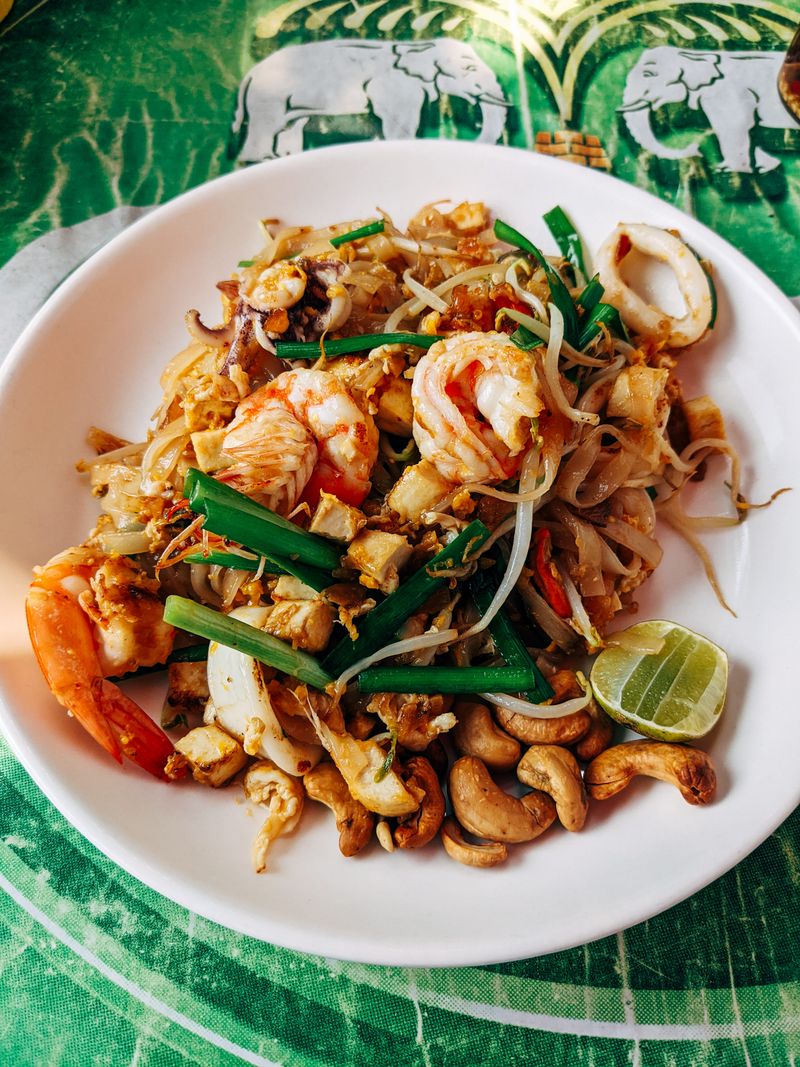
Restaurant pad thai and the pad thai you'd make at home are barely the same dish, nutritionally. The tamarind-sugar sauce, the wok oil, and the portion size at most restaurants push the number far past what a home-cooked version would give you.
Standard restaurant serving
| Nutrient | Amount | % Daily Value |
|---|---|---|
| Calories | 600–900 kcal | 30–45% |
| Protein | 20–28g | 40–56% |
| Carbohydrates | 70–95g | 25–35% |
| Fat | 25–40g | 32–51% |
| Sugar | 15–25g | — |
Sugar is the number most trackers don't flag. Traditional pad thai sauce is built on tamarind paste, palm sugar, and fish sauce — a single restaurant portion can carry as much added sugar as a can of soda, mostly hidden inside a savory dish.
Where the calories come from
| Component | Typical amount | Calories |
|---|---|---|
| Rice noodles (pan-fried) | ~2 cups | ~280 kcal |
| Tamarind-sugar sauce | ~3 tbsp | ~150 kcal |
| Cooking oil (wok-fried) | ~2–3 tbsp | ~250 kcal |
| Egg (scrambled in) | 1 | ~90 kcal |
| Crushed peanuts + lime | ~2 tbsp peanuts | ~95 kcal |
The oil is the single biggest lever. Home cooking uses 1–2 tablespoons; a lot of restaurant woks are more generous, and it's the ingredient with the least visual evidence in the final plate.
Protein choice
- Shrimp: lean, adds protein with minimal extra fat — the lightest common option
- Chicken: similar profile to shrimp, slightly more filling
- Tofu: depends heavily on whether it's pan-fried in extra oil first
- "Original" (dried shrimp + egg only, no meat): often lower calorie overall since there's no separately-cooked protein
Easy swap: Ask for less oil and sauce on the side if the kitchen allows it. The peanuts and lime add real flavor for very few calories — the sauce and frying oil are where most of the total actually lives.
How Bao handles it
Bao recognizes pad thai from a photo, factors in visible oil sheen and portion size, and identifies the protein — instead of assigning every plate of pad thai the same fixed calorie count regardless of how it was cooked.
Common questions
How many calories are in pad thai? A standard restaurant serving is roughly 600–900 kcal. That is a typical-range estimate, not an exact count. The page's breakdown: about 280 kcal of pan-fried rice noodles, 150 of tamarind-sugar sauce, 250 of wok oil (about 2–3 tbsp), 90 for the egg and 95 for the peanuts.
How much sugar is in pad thai? The standard restaurant serving lists 15–25 g of sugar. The sauce is built on tamarind paste, palm sugar and fish sauce, and the page says a single restaurant portion can carry as much added sugar as a can of soda, mostly hidden inside a savory dish. The sauce is doing a soda impression.
What changes the calories in pad thai the most? The oil. The page calls it the single biggest lever: home cooking uses 1–2 tablespoons, while a lot of restaurant woks are more generous, and it has the least visual evidence on the finished plate. Protein matters too: shrimp is the lightest common option, and the "original" with dried shrimp and egg only is often lower in calories overall.
Are these pad thai numbers exact? No. 600–900 kcal is a wide typical range for a standard restaurant serving, and oil and portion size move it. Bao recognizes pad thai from a photo, factors in visible oil sheen and portion size, and identifies the protein, instead of assigning every plate the same fixed calorie count regardless of how it was cooked.
Stop guessing your macros
Bao gives you honest nutrition estimates for the food you actually eat.
Download on the App Store