How Many Calories Are in a Poke Bowl?
A poke bowl looks like the safe order — raw fish, vegetables, a grain or greens base, no visible frying. That reputation is mostly earned, but it hides a real range: depending on the base, the protein, and how heavy-handed the sauce is, a "healthy bowl" can land anywhere from about 400 to 800+ calories. The base and the protein rarely cause a surprise. The sauce and the sodium almost always do.
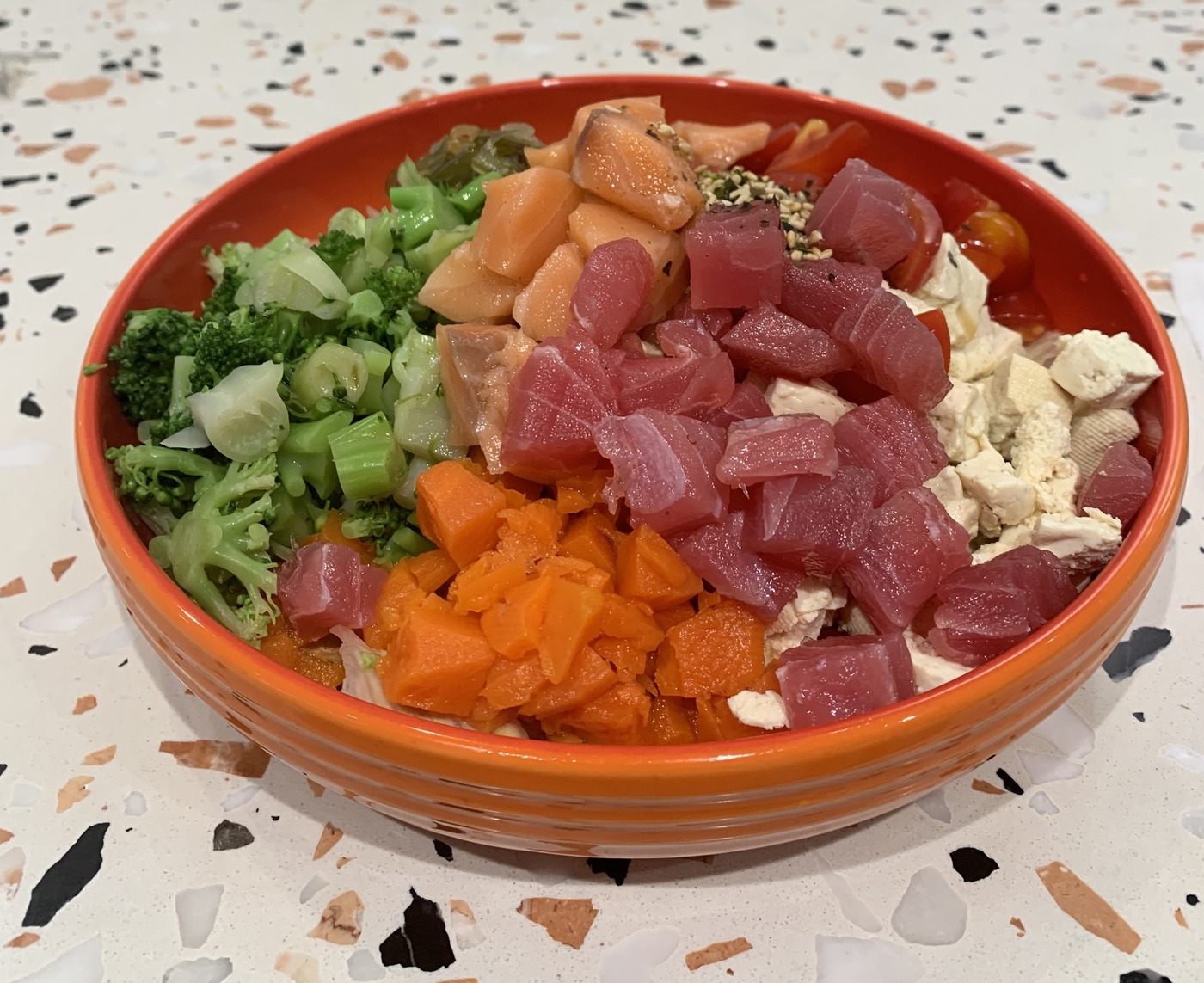
One real bowl, scanned: 550 calories
| Nutrient | Amount | % Daily Value |
|---|---|---|
| Calories | 550 kcal | 28% |
| Protein | 32 g | 64% |
| Carbs | 55 g | 20% |
| Fat | 20 g | 26% |
| Sodium | 500 mg | 22% |
This is a real bowl Bao scanned — soba noodle base, salmon and tuna sashimi, tofu, and mixed vegetables. Protein is genuinely strong here (32g), which is why poke bowls have a reasonable reputation. The part that doesn't show up anywhere on the plate is the 500mg of sodium — almost a quarter of a full day's recommended intake, and there's no single ingredient you could point to and blame.
Where the 550 calories come from
| Ingredient | Calories |
|---|---|
| Soba noodle base | 172 kcal |
| Salmon sashimi | 149 kcal |
| Tuna sashimi | 82 kcal |
| Seaweed salad | 39 kcal |
| Tofu | 33 kcal |
| Sesame seeds | 33 kcal |
| Broccoli | 30 kcal |
| Cherry tomatoes | 12 kcal |
Notice the base — soba noodles here — is the biggest single row in this bowl, bigger than either fish on its own. That surprises most people, who assume the raw fish is the calorie-heavy part of a poke bowl. It almost never is. The base usually is.
Two real scans of the same 550-calorie bowl, two different sodium numbers
Bao scanned this exact bowl twice, once in English and once in Chinese, on two separate builds of a set with slightly different toppings. Both came back at 550 calories. The sodium did not agree: 500mg in one scan, 900mg in the other. Same base, same protein, same total — but one build carried a sauce or pickled topping the other didn't, and that alone nearly doubled the sodium without moving the calorie count at all.
The takeaway: calories and sodium are not the same signal. A bowl can read identically on a calorie count and still be wildly different in salt, depending on what's mixed through it. If you're watching sodium specifically, the calorie number on its own won't tell you.
Base matters more than protein
| Base (typical serving) | Calories |
|---|---|
| Mixed greens / lettuce | ~15–30 kcal |
| Brown rice | ~110–150 kcal |
| White rice | ~130–170 kcal |
| Soba or udon noodles | ~170–220 kcal |
Swapping a noodle base for a greens base is the single biggest lever in a poke bowl, and it's a bigger lever than skipping a protein or two. The fish itself — raw, no oil, no batter — is one of the lighter things in the bowl by weight.
Does "healthy bowl" mean low calorie?
Not automatically. A poke bowl with a noodle base, two proteins, a creamy sauce, and a fried topping like crunchy onions or tempura flakes can clear 700–800 calories — more than a lot of fast food — while still looking, and marketing itself, as the light option on the menu. The ingredients are individually healthy; the assembled total is a separate question the menu board doesn't answer.
Common questions
Is poke raw fish safe to eat? Poke is typically made with sushi-grade fish that's been previously frozen to kill parasites, which is standard practice at reputable poke and sushi counters. If you're pregnant or immunocompromised, raw fish is generally advised against regardless of grade.
What's the healthiest base? Greens or a greens-and-rice mix keeps the base calories lowest while still leaving room for a generous protein portion — the base is the easiest lever to pull if you're managing the total.
Why does sauce move the number so much? Poke sauces are often soy-, mayo-, or oil-based and get ladled rather than measured, so the same "one scoop of sauce" can range from a light drizzle to several tablespoons depending on who's serving it — and soy-based sauces are where most of the hidden sodium lives.
How Bao handles it
Bao itemizes what it can actually see in the photo — the base, the proteins, the vegetables — and reports sodium and other nutrients as their own line even when nothing on the plate visually represents them, rather than folding "healthy-looking" ingredients into one flattering total.
Stop guessing your macros
Bao gives you honest nutrition estimates for the food you're actually eating.
Download on the App Store