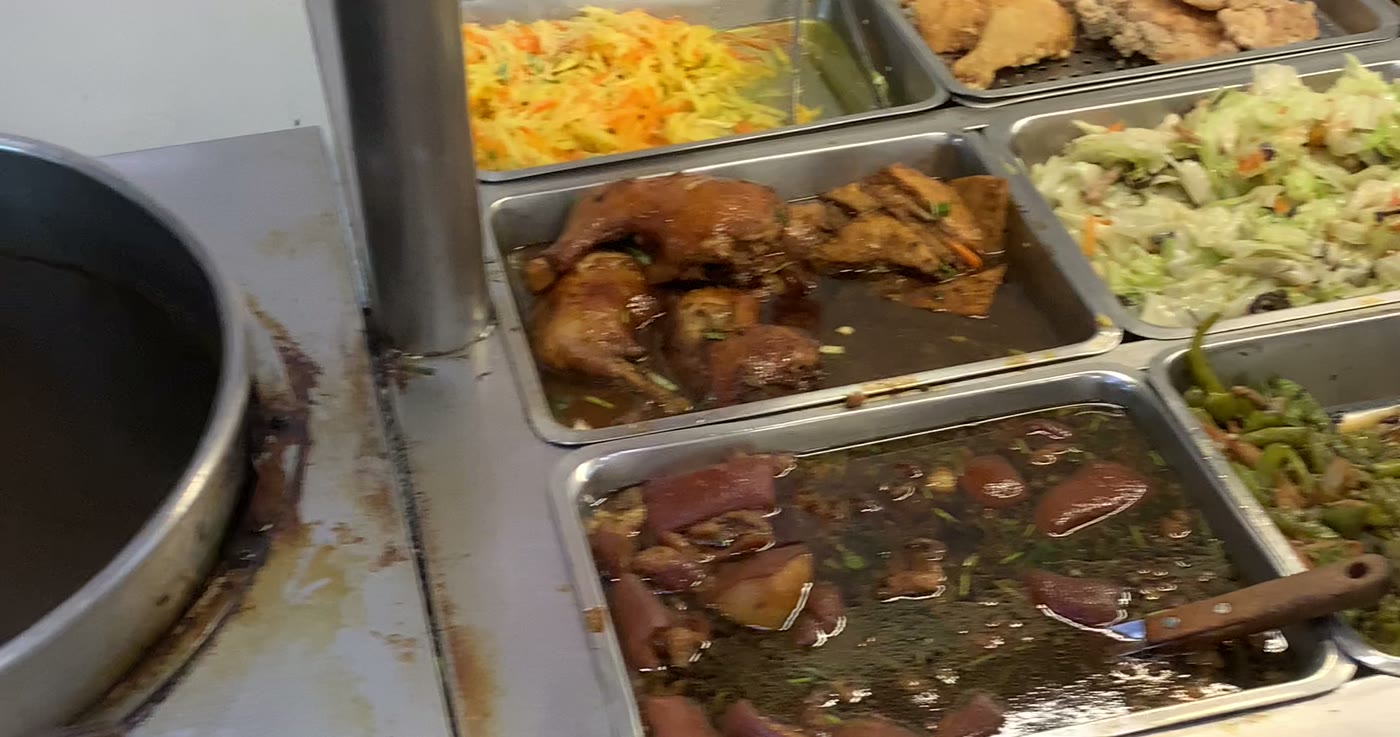
How Many Calories Are in a 自助餐 (Taiwanese Buffet) Plate?
A 自助餐 (zì zhù cān) — the self-serve buffet counter found on almost every street in Taiwan — is the hardest meal in the country to count. You point at four or five trays, someone scoops an unmeasured portion of each, and you pay by weight or by the compartment. There is no menu, no serving size, and no label. Most people compensate by agonizing over which vegetables to pick, which turns out to be the least useful thing they could be doing.
One real plate, scanned: 612 calories
| Compartment | Calories | Share of plate |
|---|---|---|
| Braised pork hock (滷豬腳) | 324 kcal | 53% |
| White rice (白飯) | 158 kcal | 26% |
| Braised tofu skin (滷豆皮) | 72 kcal | 12% |
| Stir-fried greens (炒青菜) | 58 kcal | 9% |
| Total | 612 kcal | 100% |
That is one real plate Bao scanned at a buffet counter, itemized compartment by compartment. Protein came back at 39g, which is genuinely solid for a single plate — the braised pork hock does most of that work. Calories and protein are the figures this scan verified; anything else on a plate like this varies too much with the ladle to state as a number.
The rice beats both side dishes combined
Here is the part that catches people. The two side dishes — braised tofu skin and stir-fried greens, the compartments most diners spend their deliberation on — come to 130 calories together. The white rice, which nobody deliberates about at all, is 158 on its own.
The rice is a quarter of the entire plate (26%), and it is the one compartment that gets chosen by default rather than chosen deliberately. Swapping one vegetable for another moves the total by a few dozen calories at most. Half-filling the rice compartment moves it by roughly eighty.
The takeaway: at a buffet counter, the decisions people agonize over and the decisions that actually move the number are almost entirely different decisions.
The 80% rule
| Group | Calories | Share |
|---|---|---|
| Main dish + rice | 482 kcal | 79% |
| All side dishes | 130 kcal | 21% |
On this plate, the main dish and the rice account for 79% of the total. That is a rule worth carrying into the next buffet without any app at all: the main and the rice are roughly 80% of a 自助餐 plate, and the side dishes are the remaining 20%. However much vegetable you pile on, it does not reach the 80%.
The practical version: if you want the plate to be lighter, change the main dish or the amount of rice. Choosing between two vegetables is a rounding error dressed up as a decision.
What the rule can't tell you
The 80% rule tells you where to look. It cannot tell you what today's portion actually weighs — and at a buffet counter, that is the whole problem. Braised pork hock at 324 calories assumes the piece you were handed. A larger piece, more skin, more of the braising liquid soaked into it, and the same compartment can be well over 400.
That is the gap no rule closes, because it changes plate to plate and server to server. There is no menu to read and no label to check. The only way to know is to look at the plate that is actually in front of you.
Common questions
Is a 自助餐 plate healthy? It can be one of the better options available — you control the ratio directly, which most restaurant meals do not let you do. The structure rewards taking a smaller main and a smaller rice portion far more than it rewards vegetable selection.
How many calories is a bowl of white rice? The rice compartment on this plate came in at 158 calories. A standard bowl of cooked white rice generally runs around 200–280 calories depending on how full it is packed, which is why the buffet portion — a shallow compartment rather than a bowl — lands lower here.
Why do braised dishes come in so high? Braising means the dish sits in a sweetened soy liquid, often for hours, and both the sauce and the rendered fat stay in the tray. What looks like a lean piece of meat has usually absorbed a lot of what it was cooked in — and it keeps absorbing while it sits on the counter.
Does the vegetable choice matter at all? It matters for what you get out of the meal — fibre, micronutrients, feeling full — just not for the calorie total. Those are two different questions and the counter makes them feel like one.
How Bao handles it
Bao itemizes a buffet plate compartment by compartment from one photo, so the rice gets its own line instead of disappearing into a single flattering total. That per-compartment split is the point: a plate total tells you the meal was 612 calories, but only the breakdown tells you that the rice you did not think about outweighed both vegetables you did.
Stop guessing your macros
Bao gives you honest nutrition estimates for the food you're actually eating.
Download on the App Store