How Many Calories Are in 蚵仔麵線 (Oyster Vermicelli)?
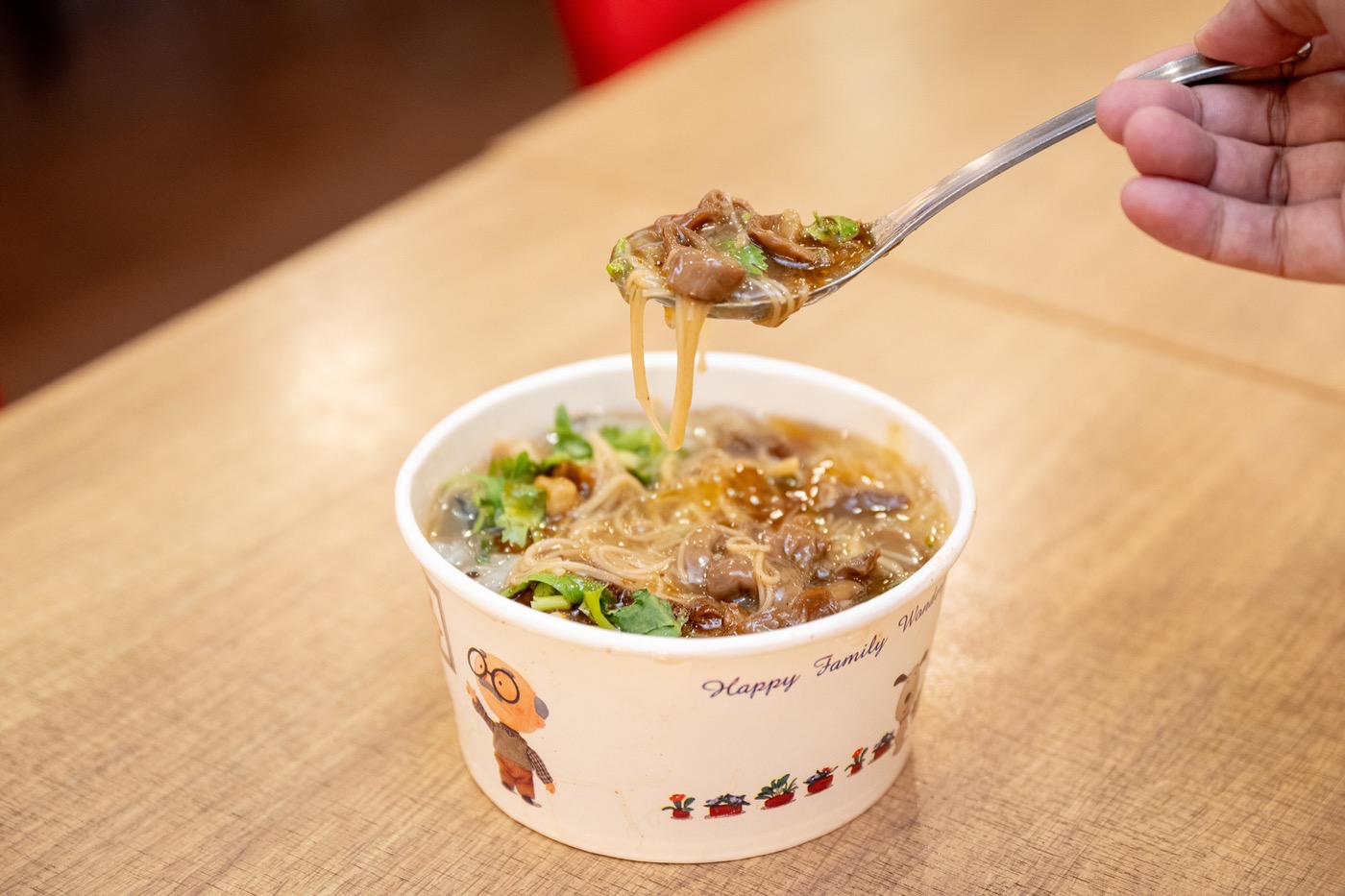
蚵仔麵線 (oyster vermicelli, also called mi sua) is a Taiwan night-market and small-shop staple: thin wheat-rice vermicelli and oysters (sometimes pork intestine too) simmered into a thickened, glossy broth, finished with cilantro, minced garlic, and a splash of black vinegar. Because it's technically a soup, it gets filed under "light" almost by reflex — but the thickened broth and the fried-shallot-oil finish carry more weight than that reflex suggests.
Standard serving (one bowl, ~400–450g with broth)
| Nutrient | Amount | % Daily Value |
|---|---|---|
| Calories | 320–420 kcal | 16–21% |
| Protein | 14–20g | 28–40% |
| Carbohydrates | 45–60g | 16–22% |
| Fat | 8–14g | 10–18% |
| Sodium | 1100–1500mg | 48–65% |
The thickened broth — not the oysters — carries the calories
Oysters here are just as lean as they are in oyster omelette. What gives this bowl its actual weight is the sweet-potato-starch thickening in the broth itself — that's what makes it feel substantial to drink, not just watery seasoning — plus the fried-shallot oil stirred in at the end. The sodium number is high because the broth is deliberately seasoned strong enough to carry the whole bowl.
More pork intestine means more fat. Versions with intestine added run higher than oyster-only bowls. And if you drink the broth down to the bottom (not just eat the noodles and toppings), sodium intake alone can clear half your daily recommended limit in one bowl.
Why other apps get this wrong
Most calorie trackers see "noodle soup" and default to a light estimate, missing the starch calories in the thickened broth entirely and routinely underestimating sodium for the whole bowl, not just the solids.
How Bao handles it
Bao reads broth thickness and shallot-oil coverage from the photo, rather than treating it as a generic clear-broth noodle soup.
Common questions
How many calories are in oyster vermicelli (蚵仔麵線)? One standard bowl (about 400–450 g with broth) is roughly 320–420 kcal. That is a typical-range estimate, not an exact count. The page says the thickened broth, not the oysters, carries the calories: the sweet-potato-starch thickening plus the fried-shallot oil stirred in at the end.
Is oyster vermicelli high in sodium? The page lists 1100–1500 mg for a standard bowl, which is 48–65% of the daily value. It says the broth is deliberately seasoned strong enough to carry the whole bowl, and that drinking it down to the bottom can clear half of your daily recommended limit in one bowl.
What changes the calories in oyster vermicelli the most? The broth and what goes into it. The page says the starch thickening and the shallot oil give the bowl its weight, and that versions with pork intestine run higher than oyster-only bowls because more intestine means more fat. The oysters are as lean as in oyster omelette. It is technically a soup, which is not the same as light.
Are these oyster vermicelli numbers exact? No. 320–420 kcal is a typical range for one bowl, and broth thickness, shallot oil and whether intestine is added all move it. Most calorie trackers see "noodle soup" and default to a light estimate. Bao reads broth thickness and shallot-oil coverage from the photo instead of treating it as a generic clear-broth noodle soup.
Stop guessing your macros
Bao gives you honest nutrition estimates for the food you actually eat.
Download on the App Store